
Polyurethane Cement Flooring Perth
The system we specify where epoxy will not survive. Hot wash-down, steam cleaning, thermal shock and heavy chemical exposure, in food plants, breweries and processing facilities across WA.
- Handles steam and hot water cleaning
- Takes thermal shock without debonding
- Resists organic acids, fats, sugars and caustics
- Heavy slip ratings that stay cleanable
- 25+ years installing specialist floor systems in WA
When Epoxy Is The Wrong Answer
Epoxy is a good product in most industrial buildings. In a hot, wet, chemically aggressive one it is the wrong product, and putting it down anyway is how you end up recoating in eighteen months.
Two things kill epoxy in those environments. The first is temperature. Epoxy and concrete expand at different rates, so when a floor gets hit with boiling wash-down water or steam, the coating moves and the slab does not. Do that daily and the bond fails.
The second is chemical attack. Lactic acid from dairy, organic acids from fruit and vegetable processing, sugars from brewing, fats and blood from meat works, plus the caustic cleaners used to remove all of it.
Polyurethane cement was developed for exactly these conditions. It moves at close to the same rate as concrete, so thermal shock does not break the bond, and it holds up chemically where epoxy chalks and blisters.
Free Quotes Within 48 Hours
Where We Install It
Commercial kitchens
Breweries and beverage production
What Polyurethane Cement Handles
Thermal shock
Steam cleaning, boiling wash-down and rapid temperature swings. The system expands and contracts at close to the rate of the slab underneath it, so the bond holds.
Sustained heat
Continuous operating temperatures well beyond what epoxy tolerates, which is why it goes into cook rooms, sterilising areas and around ovens.
Chemical attack
Organic acids, fats, oils, sugars, brine, blood and the caustic cleaners used to wash them off.
Heavy impact and traffic
Built at thickness, so it takes forklifts, pallet drops and trolley traffic. It is a screed rather than a coating.
Moisture in the slab
More tolerant of residual moisture than epoxy, which matters on older slabs and where a membrane was never installed.
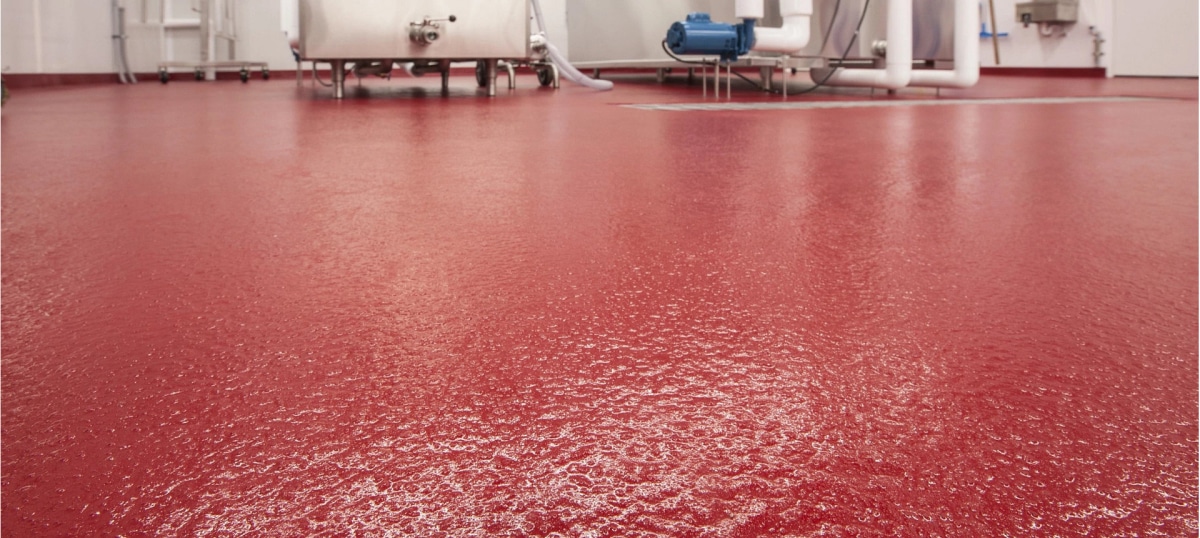
Slip resistance
Aggregate built into the system at the specified level. Heavy grip for wet areas, without becoming a surface that traps soil and fails an audit.
Getting The Build Right
Polyurethane cement is specified by thickness, and the thickness is set by what happens on the floor.
A light-duty area with occasional wash-down needs less than a meat processing floor that gets steam cleaned every shift and carries forklift traffic. Going too thin to save money on a heavy-duty area is a false economy, because the system fails early and you pay twice.
We set the build at the site visit based on the temperature range, the cleaning regime, the chemical exposure and the traffic. It goes in the written specification so you can see what you are getting and check it against anything else you have been quoted.
What To Expect
- Site visit
Slab condition, moisture testing, drainage falls, temperature range, cleaning regime and chemical exposure. - Specification and quote
System, build thickness, slip rating, coving and preparation method, in writing within 48 hours. - Programming
Shutdown windows, nights and weekends, or staged sections so you keep running. - Preparation
Shot blasting or diamond grinding back to sound concrete. Crack repair, drain and threshold detailing. - Installation
Laid to the specified thickness, coved at the walls where the job calls for it, finished to the slip rating. - Handover
Data sheets, cure times and a cleaning regime that will not damage the floor.
2+ Year Product & Workmanship Warranty
We offer a 2-year warranty on commercial and a 5-year warranty on residential projects for your lasting peace of mind.
What Our Clients Say
Polyurethane Cement Questions
How is it different from epoxy?
Epoxy is a coating, PU cement is a screed laid at thickness. The bigger difference is thermal behaviour. PU cement expands and contracts at close to the same rate as concrete, so hot wash-down and steam cleaning do not break the bond the way they do with epoxy.
Is it more expensive?
Per square metre, yes. Over the life of the floor, usually not. In a hot wet environment an epoxy floor may need replacing in two to three years while a PU cement floor is still working in fifteen.
Can it go over an existing epoxy floor?
The old coating comes off first. It gets shot blasted or ground back to sound concrete so the new system bonds to the slab rather than to whatever was there before.
Does it need coving?
In food and wet areas, yes. The floor turns up the wall in a continuous curve so there is no corner to trap debris and the whole junction hoses down.
How long before we can use the floor?
Faster than most people expect. Cure times depend on the system and ambient temperature, and we programme the job so an area is back in service as quickly as possible. We give you the actual figures at the quote stage.
Will it stay non-slip after a few years?
The aggregate is part of the system rather than a topcoat, so the grip does not wear off the way a broadcast finish on a thin coating can.
Do you install it in regional WA?
Yes. We mobilise with everything needed to complete in one trip.
Get A Specification And A Price
Tell us what runs in the space, the temperature range and your wash-down regime. We will come out, assess the slab and give you a written scope and price within 48 hours.
